ITEM — fighting dust mites through indoor climate
A compact device that reads temperature, humidity and air quality and prompts you to air the room out, making your home a harder place for dust mites to thrive.
Context
Dust mite allergy is one of the most common allergies in Europe, and it tends to build up over years of exposure at home. Mites thrive where it is warm, humid and full of the skin flakes we shed, so they gather mostly in the bedroom — in mattresses, pillows and bedding. The real problem is a gap in climate: people feel comfortable in conditions that are slightly cooler and drier than the warm, humid environment mites need to survive and reproduce. ITEM works in that gap.
Process
- Research We studied how dust mites live, what they feed on and the conditions they need, then mapped where they concentrate in the home — with the bedroom standing out. We looked at the three ways to deal with them: prevention, removal, and treatment.
- Design goals We set a single guiding idea: rebalance the indoor climate by drawing on the conditions outside. By comparing the comfort range for people with the ideal range for mites across temperature, humidity and air quality, we found the window where we could act without hurting how the room feels to live in.
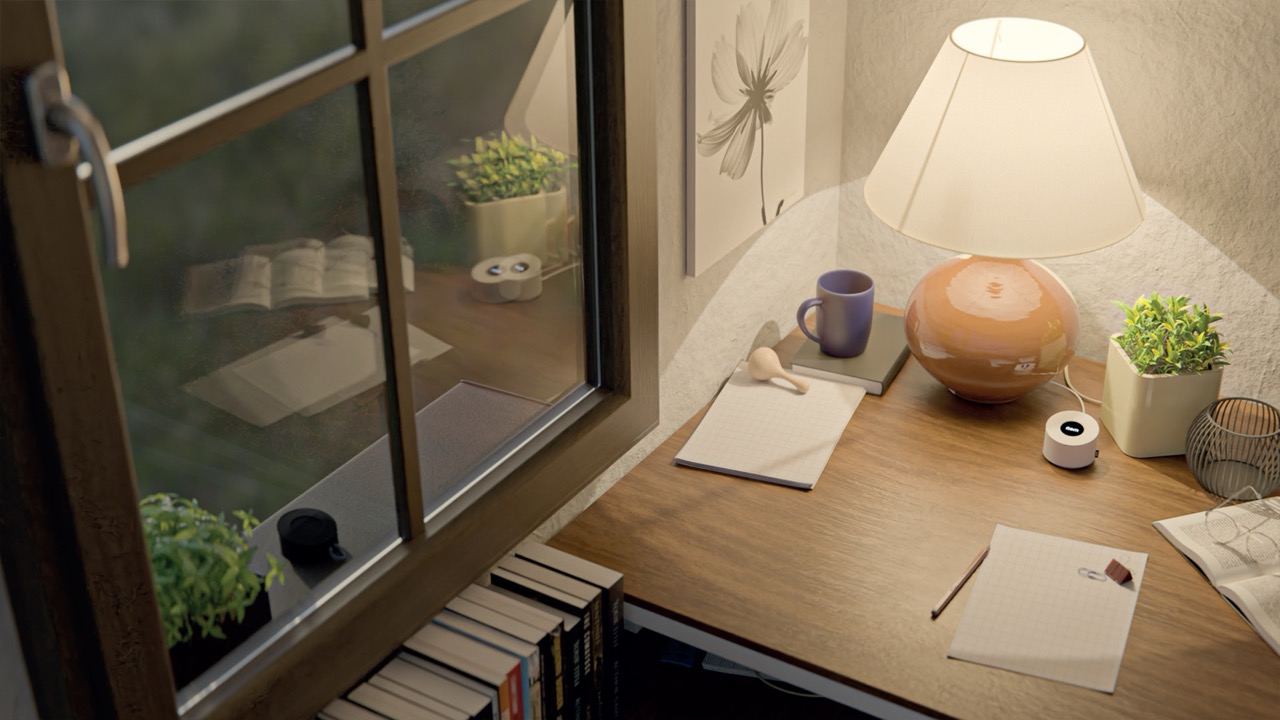
- Concept The device follows a simple input, output, action loop: it senses the conditions, weighs how they have changed over time, and tells you when to open the window to bring the room back into balance and break the cycle that lets mites spread.
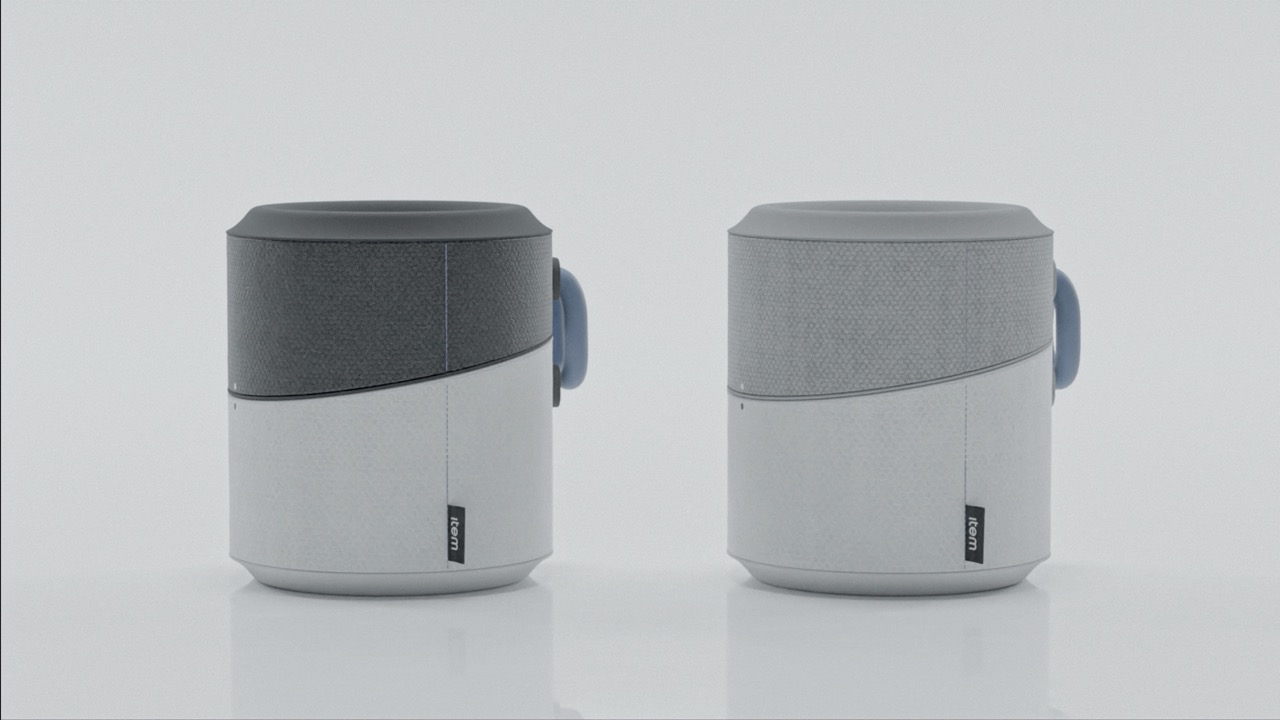
- Product design A small object meant to live in the bedroom: a washable fabric cover, a front display with a single button, an elastic loop to hang it, and USB-C charging. The shell is built from ABS and TPU, with a perforated core that lets air reach the sensors.
- Hardware Built around an ESP32, with a combined sensor for temperature, humidity and air quality, a round display, a button, a buzzer and charging pins. We costed every component to keep the product realistic to manufacture.
- Interface A handful of clear states walk you through the whole cycle — powering on, sensing, and clearing the air, along with status, completion and alerts — all kept minimal on the round display.
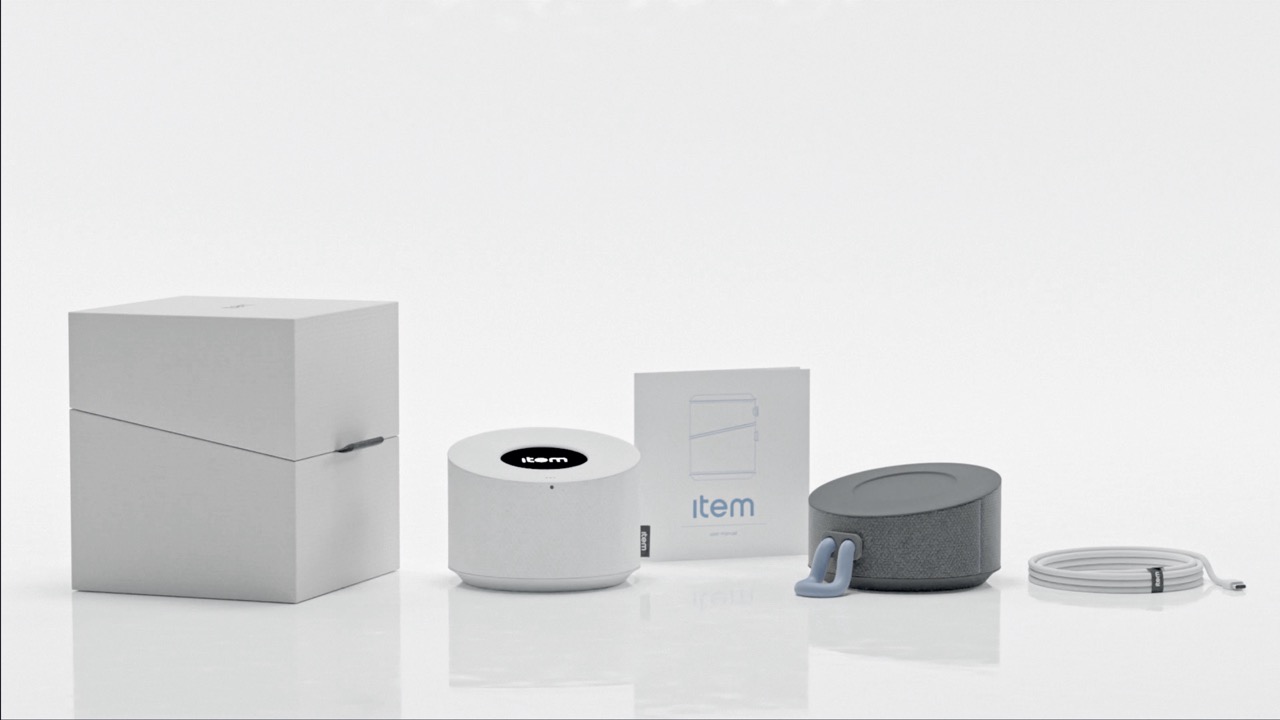
- Product system We developed the brand, the packaging (box with inner trays, manual and USB-C cable), the colourways, and a physical prototype to check the ergonomics and proportions.
Outcomes
- Compact bedroom device, small enough to keep on a nightstand
- Working physical prototype plus a full product system: brand, packaging and manual
- Component costs mapped end to end to keep manufacturing realistic
Tools
Gallery